.svg)
By Alex, founder of Ownprint. Yes, I run the platform this article is about, so I kept the numbers conservative and linked every source. Last updated September 8, 2026.
If you already sell print on demand t-shirts, hoodies, mugs, posters, phone cases, tote bags, stickers, canvas prints, or blankets, adding personalized jewelry to your store is probably the highest-leverage move available to you. It's the same amount of work per sale as any of those products, with about four times the profit.
You already have the hard parts figured out: a store that's set up, listings that convert, a niche you understand, and the habit of turning designs into products. This article is about pointing those exact skills at a product category that pays much better, and being honest about where jewelry is harder too.
Let's compare the products most of us start with, using typical numbers you can check against any supplier's catalog.
A mug usually costs you around $8 and sells for somewhere between $15 and $20, so you profit around $7. A t-shirt sells for about $20 and costs you about $12, so you profit around $8. Posters, phone cases, and tote bags all live in that same neighborhood: a few dollars of profit per sale, earned honestly, but capped by what anyone will pay for that kind of product.
Now look at jewelry. A personalized necklace sells for $49 or more and costs about $15 to produce and ship, so you profit around $34.
| Product | Costs you | Sells for | Your profit |
|---|---|---|---|
| Mug | ~$8 | $15 to $20 | ~$7 |
| T-shirt | ~$12 | ~$20 | ~$8 |
| Personalized necklace | ~$15 | $49+ | ~$34 |
Same amount of work, at least four times the profit. And that changes what your daily sales are worth: one jewelry sale a day is about $1,000 in profit a month. Three sales a day is about $3,000. Five a day is about $5,000, every single month, from the same effort that earns a t-shirt seller a fraction of that.
Nobody needs another necklace the way they need a coffee mug. Personalized jewelry gets bought for birthdays, anniversaries, Mother's Day, Father's Day, weddings, Valentine's Day, Christmas, graduations, memorials, new jobs, recovery gifts. If there's an occasion, there's a reason to gift it.
And people don't shop around on price for something emotional. They buy the piece that means the most. A necklace with a name, a date, coordinates, or a line of someone's handwriting isn't competing with mass-produced jewelry on price, because it exists for exactly one person.
"I get people messaging me like, this brought me to tears, this brought my sister to tears."Lisa, Ownprint seller, from her story

The packaging does some of the selling for you, too. Every order arrives gift-ready by default, so the moment your buyer's "will this make them cry" test gets answered is also the moment they decide to come back.
There's a second benefit hiding in that occasions list: there's always one coming. Apparel sellers know the feeling of riding one Q4 wave and then waiting out the year. Gift occasions are spread across the whole calendar, so jewelry smooths your income instead of adding another product that spikes in December.
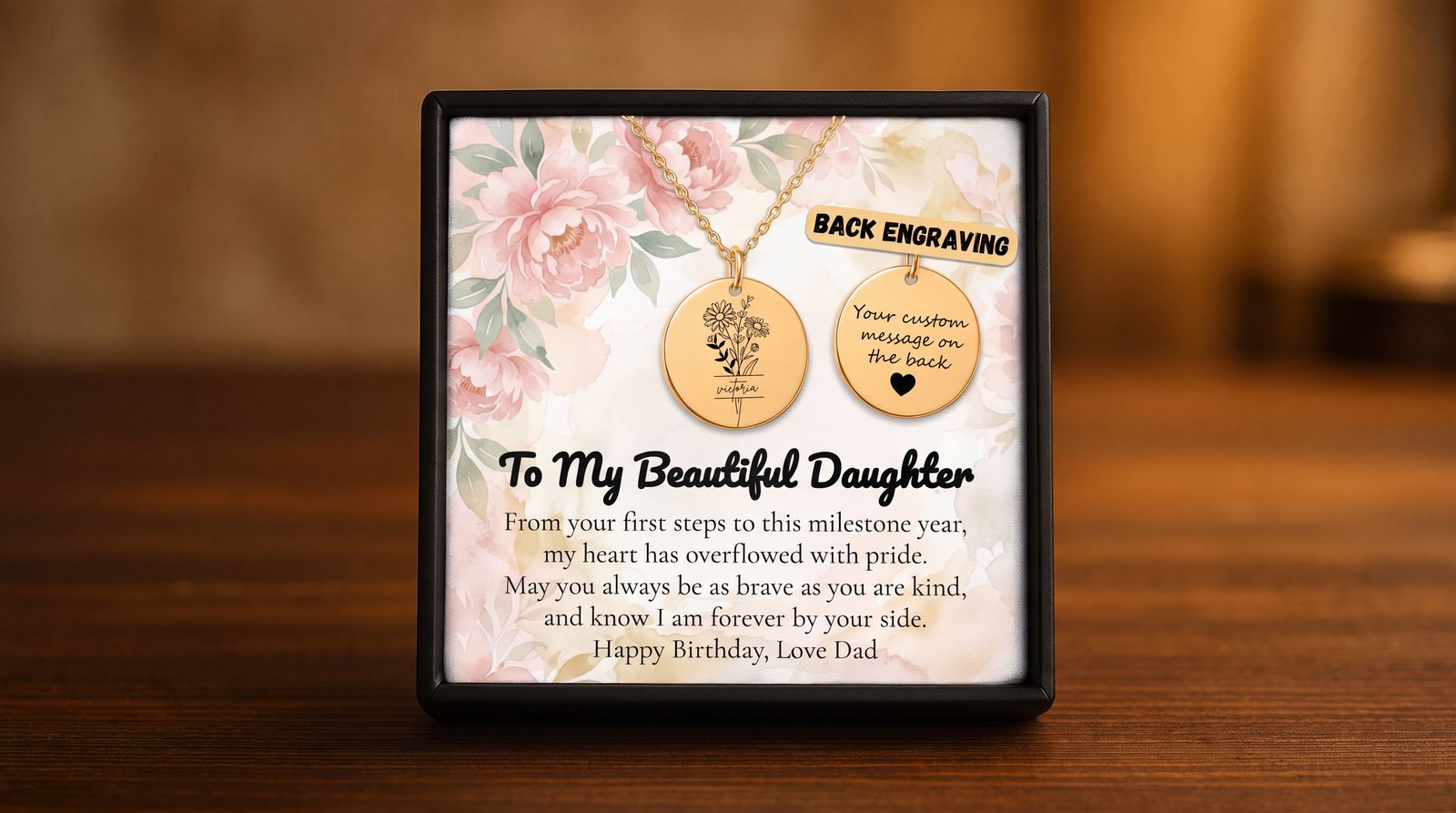
Here's a number from our own platform that surprises most apparel sellers: when buyers personalize a piece of jewelry, about 55% of them also take a back engraving upsell. Our sellers usually charge $8 to $10 extra for it, and it costs about $4 to produce.
Think about what that means. On more than half of your orders, the buyer voluntarily adds several dollars of nearly pure profit, because once you're buying a gift for someone, engraving the back of it is irresistible. There's no moment like that in a t-shirt or mug purchase.
Everyone starts print on demand with t-shirts and mugs, which means millions of sellers fighting over the same buyers with products from the same catalogs. Jewelry is a different landscape: the serious sellers number in the hundreds to low thousands, while the demand behind those gift occasions is enormous.
Your niche knowledge is the unfair advantage here. If you've been selling t-shirts to dog moms, nurses, or fishing dads, you already know exactly what their jewelry looks like, and most of your competitors in that niche haven't thought about jewelry at all. One of our sellers, Lily, built her shop on saint medal necklaces for the confirmation-gift niche she knew from her years as a youth minister. She has around 2,000 orders so far, in a niche a generalist would never have spotted.
Adding jewelry doesn't ask you to start over. Ownprint connects to the Shopify or Etsy store you already run, and your jewelry listings go up next to your existing products. Designing works the way you'd expect, with a built-in editor for text, fonts, and graphics, plus an AI listing optimizer for titles and descriptions. Your buyers personalize right on your product page, with names, dates, and photos flowing straight to production, so there's nothing for you to copy over on any order. The full walkthrough of what the platform does is here, function by function.
Want to see the whole flow before you commit? Watch creating your first product, start to finish, and you'll know exactly what your first hour looks like.
And if you already have a winning design or product, you're not starting from a blank page at all. The design that sells on your t-shirts can become a pendant, and the niche that buys it is the same niche that will gift it. Your best seller is your first jewelry listing waiting to happen.
"The business has now done over $36,000 Australian dollars in revenue so far, which is pretty amazing to me, given that I've not been able to work on it full-time at any point."Jacqueline, artist and Ownprint seller who added jewelry alongside her other businesses, from her story
Ownprint is free, with no subscription and no minimums. Your customer pays you first, and only then do you pay the base cost to produce and ship, so you're never out of pocket. Base costs run roughly $12 to $20 per piece depending on the product, with exact numbers on the pricing page.
So the experiment is genuinely low-risk: connect the store you already have, push ten jewelry listings into your best niche, and let the orders tell you whether jewelry earns a permanent place in your shop. That's exactly how Doris did it: she added print on demand jewelry to her existing Etsy shop in 2024, with zero inventory, and has passed 480 orders since. With Q4 coming, the timing does the marketing for you.
Behind the platform there's a support team our sellers mention almost as often as the products, because things get handled person to person, each situation on its own terms. No scripts, no ticket-bot runaround. As Lisa put it: "Anything that came up, I knew it was gonna be handled."
Will every listing hit? Of course not, your first t-shirts didn't either. But you're not guessing like you were back then: you know your niche, you know your winners, and now you know the margins waiting on the other side. As Jacqueline puts it: "Just start. And don't chase perfectionism. Making mistakes is really important because it's useful information."
Connect your Shopify or Etsy store, push your first pieces, and pay nothing until you make a sale.
Create your free accountNew to how the production side works? Here's how it works, from your design to your customer's door. And if you want to see what selling this stuff actually looks like, read Lisa's story: 9,000 orders and counting.

Create and sell unique and high-margin print on demand jewelry products faster, cheaper, better.
START TODAY
Untapped, yet highly profitable. The most
unique pod products on the market

We help you grow your business by fulfilling your orders faster than ever